How Art and Drawing Boost Memory and Cognitive Skills in Growing Minds
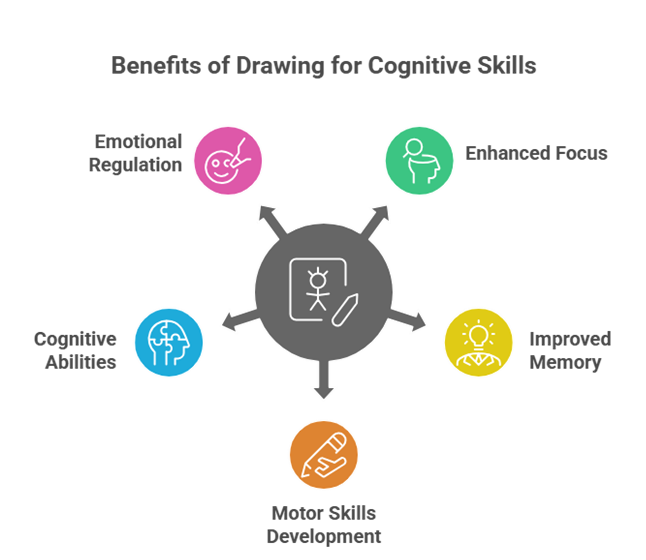
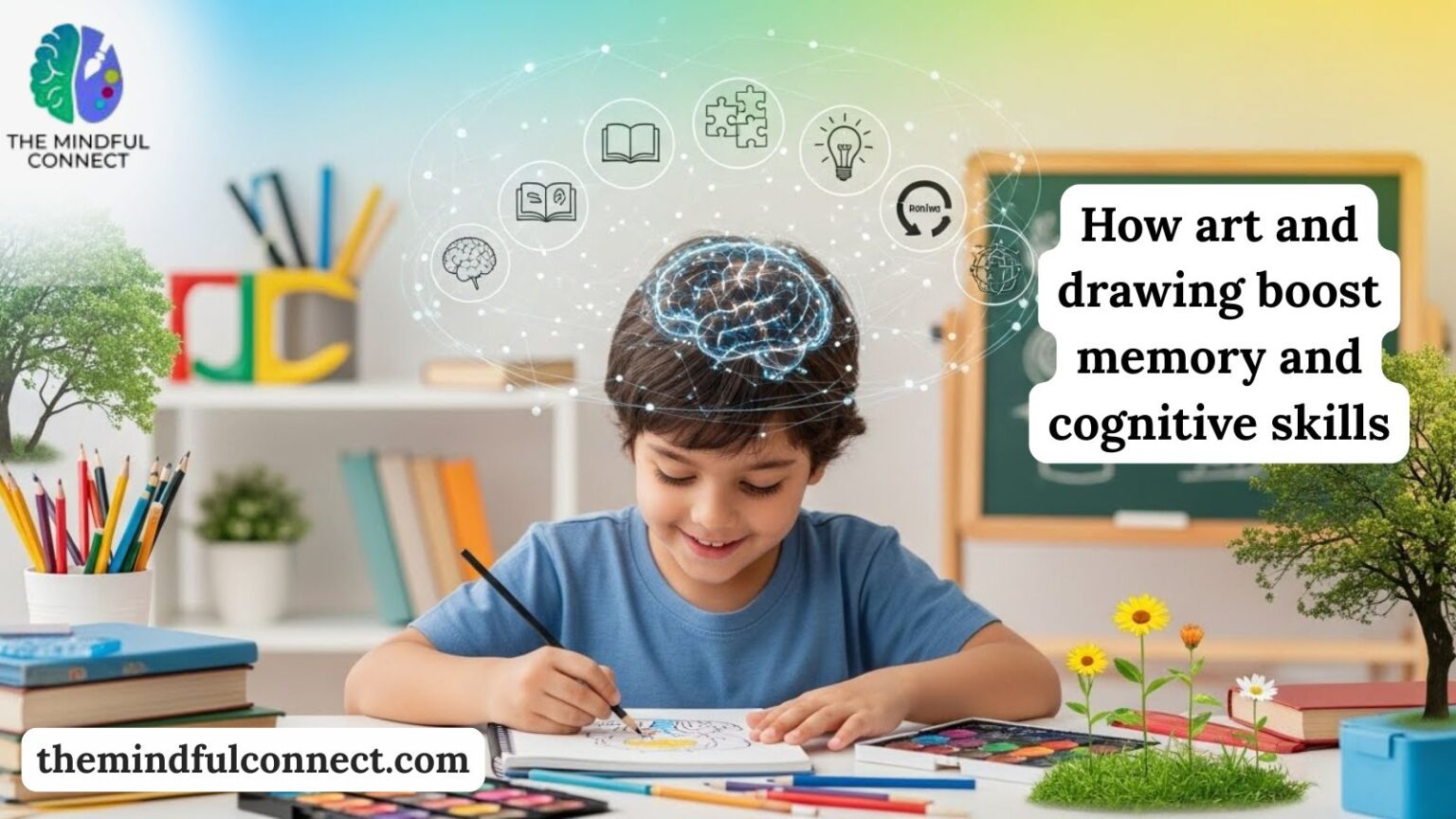
Art and drawing do far more than entertain children. They actively strengthen memory, focus, and cognitive abilities. How art and drawing boost memory and cognitive skills has been explored in numerous studies, and the results are clear: these creative activities engage the brain in unique ways that words or passive learning alone cannot match.
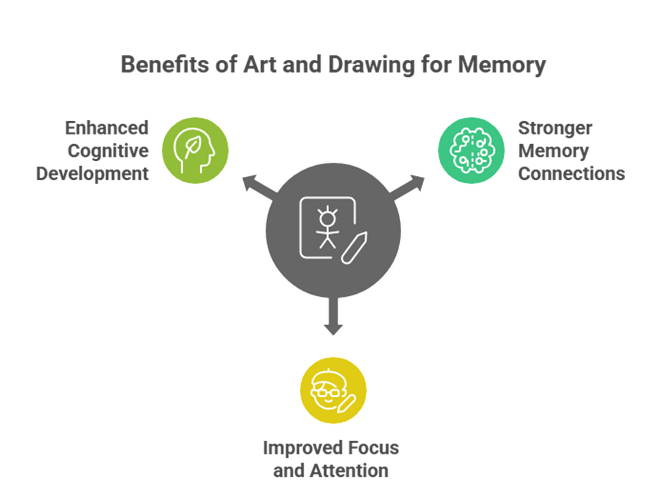
Drawing Makes Memories Stronger
When children draw what they’ve learned, they engage multiple brain regions at once like visual, motor, and verbal. This multi-sensory approach creates richer, more durable memory traces.
How art and drawing boost memory and cognitive skills
- Activates the hippocampus (key for memory formation)
- Builds stronger neural connections through hands-on creation
- Improves recall, children who draw concepts remember them better than those who only write or read
For example, asking a child to sketch a story or science lesson turns abstract information into vivid, personal memories that last longer.
Improves Focus and Attention
Drawing demands sustained attention to detail .Choosing colours, shaping lines, and planning the composition. This gentle practice trains the brain’s attention networks, helping children concentrate for longer periods and resist distractions.
Regular art activities build:
- Better focus during schoolwork
- Reduced impulsivity
- Greater patience and mindfulness
Benefits Across All Ages
How art and drawing boost memory and cognitive skills isn’t limited to young children. The advantages span every stage of life:
- Toddlers & young children: Develop fine motor skills, early memory, and visual-spatial awareness
- School-age children & teens: Enhance recall, problem-solving, and cognitive flexibility
- Adults & seniors: Maintain sharp memory, stimulate neuroplasticity, and support healthy brain ageing
Unlocking Long-Term Cognitive Growth
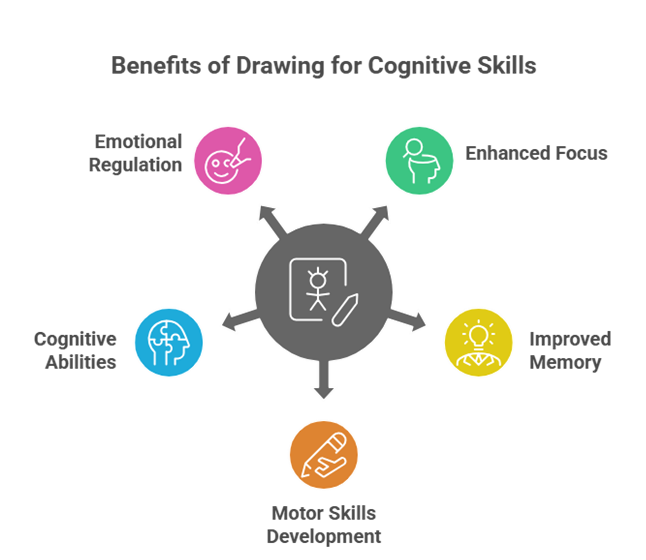
Drawing doesn’t just aid short-term recall,it helps transfer information to long-term memory. By combining movement, visualisation, and emotion, art creates deeper, more accessible memory pathways.
Additional gifts of regular drawing
- Sparks creativity and cognitive flexibility
- Supports emotional regulation by reducing stress
- Encourages problem-solving through trial and experimentation
Simple Ways to Bring Drawing into Daily Life
- Free drawing time each day
- Sketching while learning new topics
- Keeping a visual journal of experiences
Encouraging art at home and school gives children (and adults!) a joyful, powerful tool for sharper memory, stronger focus, and lifelong cognitive health.
Embrace the power of creativity today,one drawing at a time.
Disclaimer: The information in this article is for educational purposes only and is not a substitute for professional medical, psychological, or developmental advice. Consult a qualified professional for personalised guidance.
Art and drawing do far more than entertain children. They actively strengthen memory, focus, and cognitive abilities. How art and drawing boost memory and cognitive skills has been explored in numerous studies, and the results are clear: these creative activities engage the brain in unique ways that words or passive learning alone cannot match.
Drawing Makes Memories Stronger
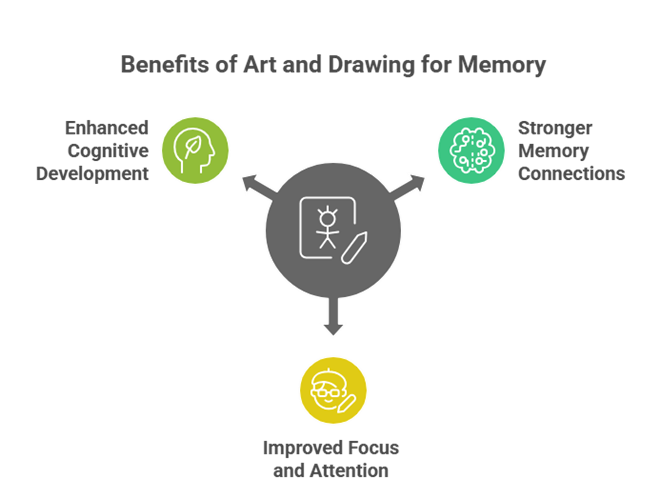
When children draw what they’ve learned, they engage multiple brain regions at once like visual, motor, and verbal. This multi-sensory approach creates richer, more durable memory traces.
How art and drawing boost memory and cognitive skills
- Activates the hippocampus (key for memory formation)
- Builds stronger neural connections through hands-on creation
- Improves recall, children who draw concepts remember them better than those who only write or read
For example, asking a child to sketch a story or science lesson turns abstract information into vivid, personal memories that last longer.
Improves Focus and Attention
Drawing demands sustained attention to detail .Choosing colours, shaping lines, and planning the composition. This gentle practice trains the brain’s attention networks, helping children concentrate for longer periods and resist distractions.
Regular art activities build:
- Better focus during schoolwork
- Reduced impulsivity
- Greater patience and mindfulness
Benefits Across All Ages
How art and drawing boost memory and cognitive skills isn’t limited to young children. The advantages span every stage of life:
- Toddlers & young children: Develop fine motor skills, early memory, and visual-spatial awareness
- School-age children & teens: Enhance recall, problem-solving, and cognitive flexibility
- Adults & seniors: Maintain sharp memory, stimulate neuroplasticity, and support healthy brain ageing
Unlocking Long-Term Cognitive Growth
Drawing doesn’t just aid short-term recall,it helps transfer information to long-term memory. By combining movement, visualisation, and emotion, art creates deeper, more accessible memory pathways.
Additional gifts of regular drawing
- Sparks creativity and cognitive flexibility
- Supports emotional regulation by reducing stress
- Encourages problem-solving through trial and experimentation
Simple Ways to Bring Drawing into Daily Life
- Free drawing time each day
- Sketching while learning new topics
- Keeping a visual journal of experiences
Encouraging art at home and school gives children (and adults!) a joyful, powerful tool for sharper memory, stronger focus, and lifelong cognitive health.
Embrace the power of creativity today,one drawing at a time.
Disclaimer: The information in this article is for educational purposes only and is not a substitute for professional medical, psychological, or developmental advice. Consult a qualified professional for personalised guidance.