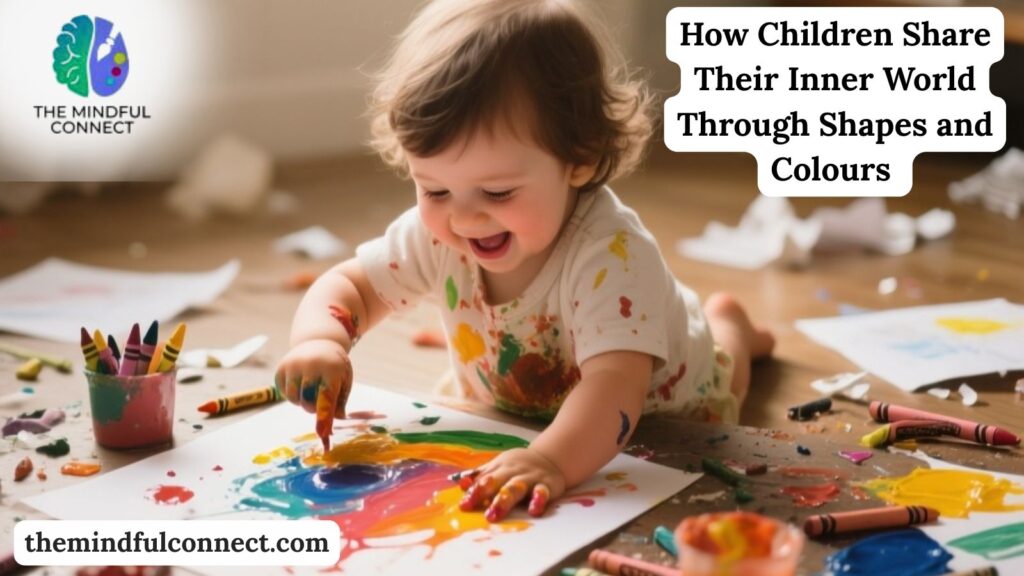
Children often feel big emotions long before they have the words to describe them. Drawing, painting, and creating give them a safe, natural way to communicate what’s inside. This is why how children express emotions through art is so powerful. It opens a gentle window into their inner world for parents, teachers, and care givers.
Art has no rules, no “right” answers, and no fear of mistakes. A blank page simply invites honesty.
Children pour their feelings onto paper without pressure to perform or explain. This freedom builds trust in the process, in themselves, and in the adults who witness it without judgement. Understanding how children express emotions through art helps us notice subtle shifts early. A sudden change in colours or shapes can signal joy, worry, or excitement. Art captures feelings in the moment, not as permanent labels.
When children feel accepted, they create more openly. Their drawings reflect emotions, not perfection.
Colours often mirror mood and energy:
Shapes carry meaning too:
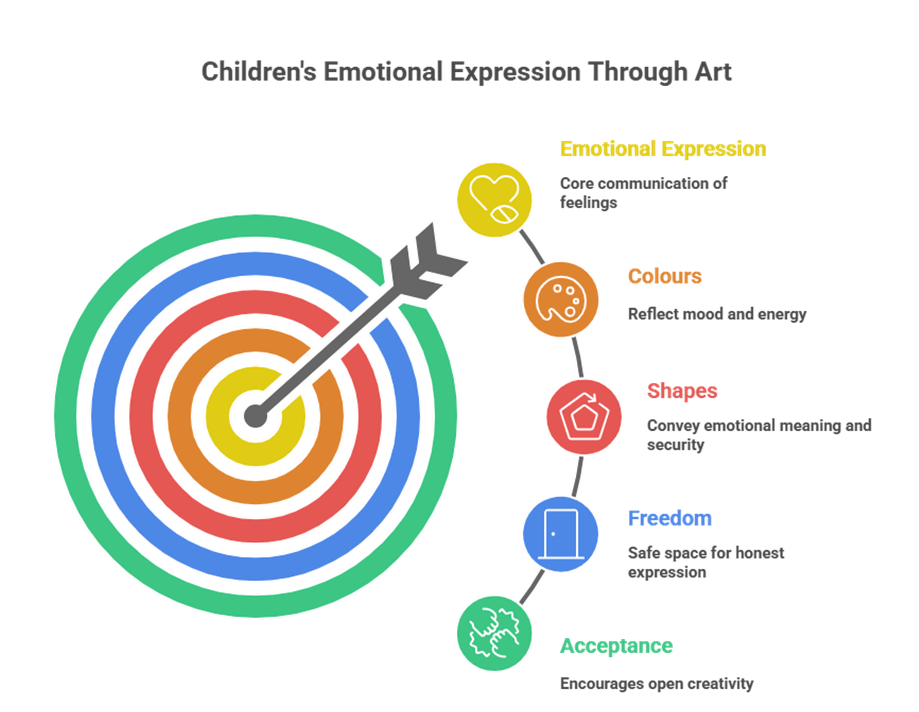
Over time, with regular creative play, patterns emerge. These gentle clues help adults understand emotional changes without words.
Mindful art supports children’s growth in quiet, lasting ways:
Simple habits make a big difference:
Children feel truly valued when adults honour their creative voice.
You don’t need to interpret every drawing. Listening ,really listening ,matters most.
Avoid questions like “What is it?” (which can feel judging). Instead, try:
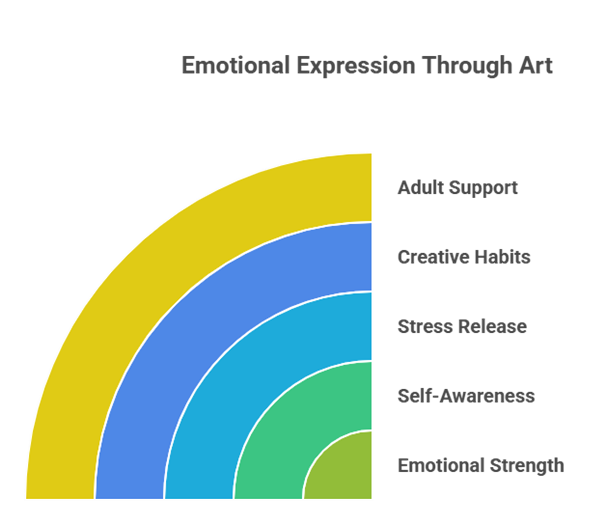
By noticing how children express emotions through art, adults learn to listen with open hearts.
Children speak through colours and shapes before words. Art gives emotions a place to land softly.
When we meet them there ,with curiosity and kindness ,we build deeper trust, stronger bonds, and brighter inner worlds.
Disclaimer: The information in this article is for educational purposes only and is not a substitute for professional medical, psychological, or developmental advice. Consult a qualified professional for personalised guidance.